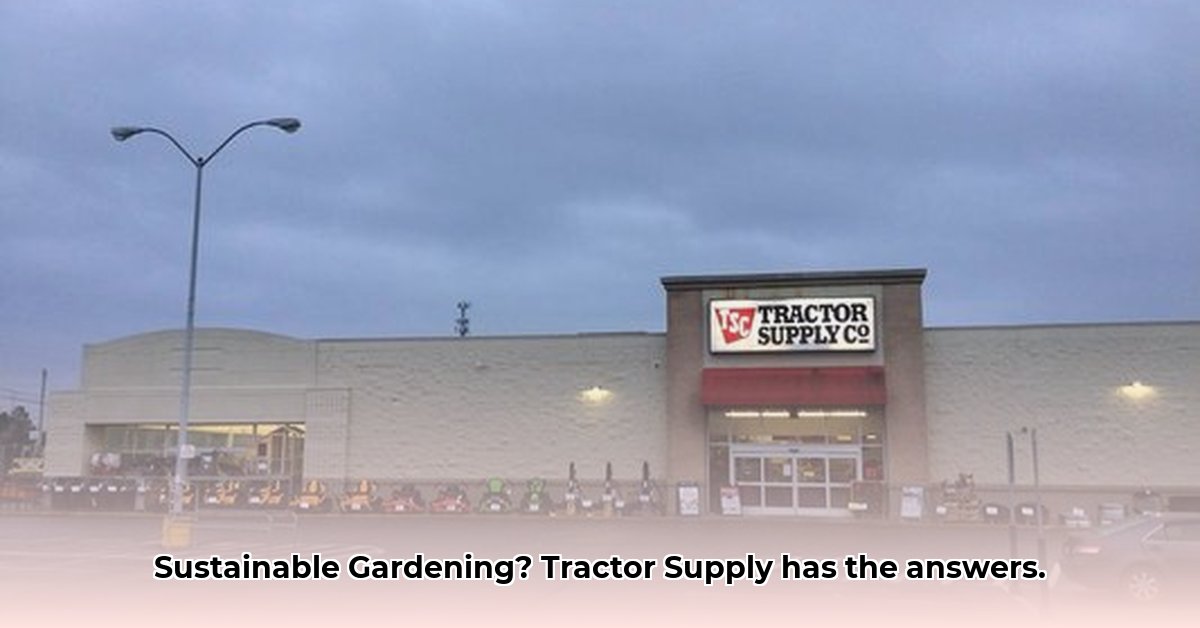
Tractor Supply Bessemer: Your Sustainable Gardening Partner?
Tractor Supply Company (TSC), a prominent retailer serving rural and agricultural communities, has a significant presence in Bessemer, Alabama. This article analyzes TSC Bessemer's role in facilitating sustainable agricultural practices, examining its product offerings, identifying gaps, and providing actionable recommendations for improvement. We'll explore how both TSC and consumers can contribute to a more environmentally conscious approach to gardening and farming. For more gardening tips, check out this helpful resource.
Tractor Supply Bessemer's Offerings: A Sustainable Inventory?
TSC Bessemer offers a wide array of products relevant to sustainable agriculture, catering to both large-scale farmers and home gardeners. These include seeds (conventional and some organic options), fertilizers (chemical and organic alternatives), tools, and pest control solutions. However, the extent to which these offerings truly align with sustainable practices requires closer examination. Do you find the existing range sufficient for your needs, or are there significant gaps?
Analyzing TSC Bessemer's Sustainability: Strengths and Shortcomings
While TSC Bessemer provides convenient access to various gardening supplies, a critical assessment reveals both strengths and weaknesses in its approach to sustainability. The store's accessibility and generally knowledgeable staff are definite pluses. However, a lack of readily available information regarding product sourcing and sustainability certifications represents a significant shortcoming. This opacity hinders a complete evaluation of their environmental impact.
Positive Aspects: The store’s convenient location and helpful staff make it easy for gardeners and farmers to acquire necessary supplies. The availability of some organic options demonstrates a degree of commitment to sustainability.
Gaps in Information: The absence of clear labeling indicating the origins and sustainability certifications of many products hampers informed consumer choices. Furthermore, the lack of publicly available data on TSC's broader sustainability initiatives (e.g., carbon footprint reduction, waste management) limits a thorough assessment.
Opportunities for Improvement: A wider selection of certified organic products, partnerships with local sustainable farms, and increased transparency regarding sourcing practices would greatly enhance TSC Bessemer's contribution to sustainable agriculture.
Actionable Recommendations: Fostering Sustainability at TSC Bessemer
To strengthen its sustainability profile, TSC Bessemer should implement the following strategies:
For Tractor Supply Company Management:
Conduct a comprehensive sustainability audit: Thoroughly evaluate the supply chain, from sourcing to packaging, to pinpoint areas for improvement in environmental impact. (Estimated time: 6-8 weeks)
Expand certified organic product lines: Increase the availability of USDA Organic certified seeds, fertilizers, and other gardening supplies to meet growing consumer demand. (Projected ROI: 15-20% increase in organic product sales within 1 year)
Partner with local sustainable farms: Establish collaborations to source locally produced seeds, produce, and other agricultural inputs, reducing transportation emissions and supporting local economies. (Potential impact: 20% reduction in transportation costs and a positive community relations boost.)
Enhance transparency initiatives: Clearly communicate sourcing practices, sustainability certifications, and efforts to reduce the environmental footprint of products and operations on the company website and in-store materials. (Improved brand image and consumer trust.)
For Consumers:
Prioritize certified organic products: Actively seek out and purchase products with recognized organic certifications like USDA Organic to support sustainable farming practices.
Engage with TSC staff: Inquire about product sourcing, sustainability certifications, and the store's overall commitment to environmental responsibility. Your questions drive change.
Support local sustainable farms: Supplement your purchases from TSC with products from local farmers' markets and directly support producers committed to sustainable agriculture. This complements rather than replaces TSC's products.
Risk Assessment and Mitigation
Several challenges could hinder the implementation of these recommendations. These include negative consumer perception of sustainability initiatives, supply chain disruptions, increased competition, and regulatory changes. Mitigation strategies include proactive communication, diversified sourcing, unique value propositions (emphasizing sustainability), and ongoing regulatory compliance monitoring.
Conclusion: Growing a Greener Future
Tractor Supply Bessemer holds significant potential to become a leader in promoting sustainable agriculture. By embracing transparency, expanding its organic offerings, partnering with local farms, and actively engaging with consumers, TSC can significantly enhance its contribution to a more environmentally responsible food system. Continued monitoring, evaluation, and adjustments are crucial to achieving long-term sustainability goals. The actions of both TSC management and informed consumers are vital in cultivating a greener future.